A Boy and his Tuba
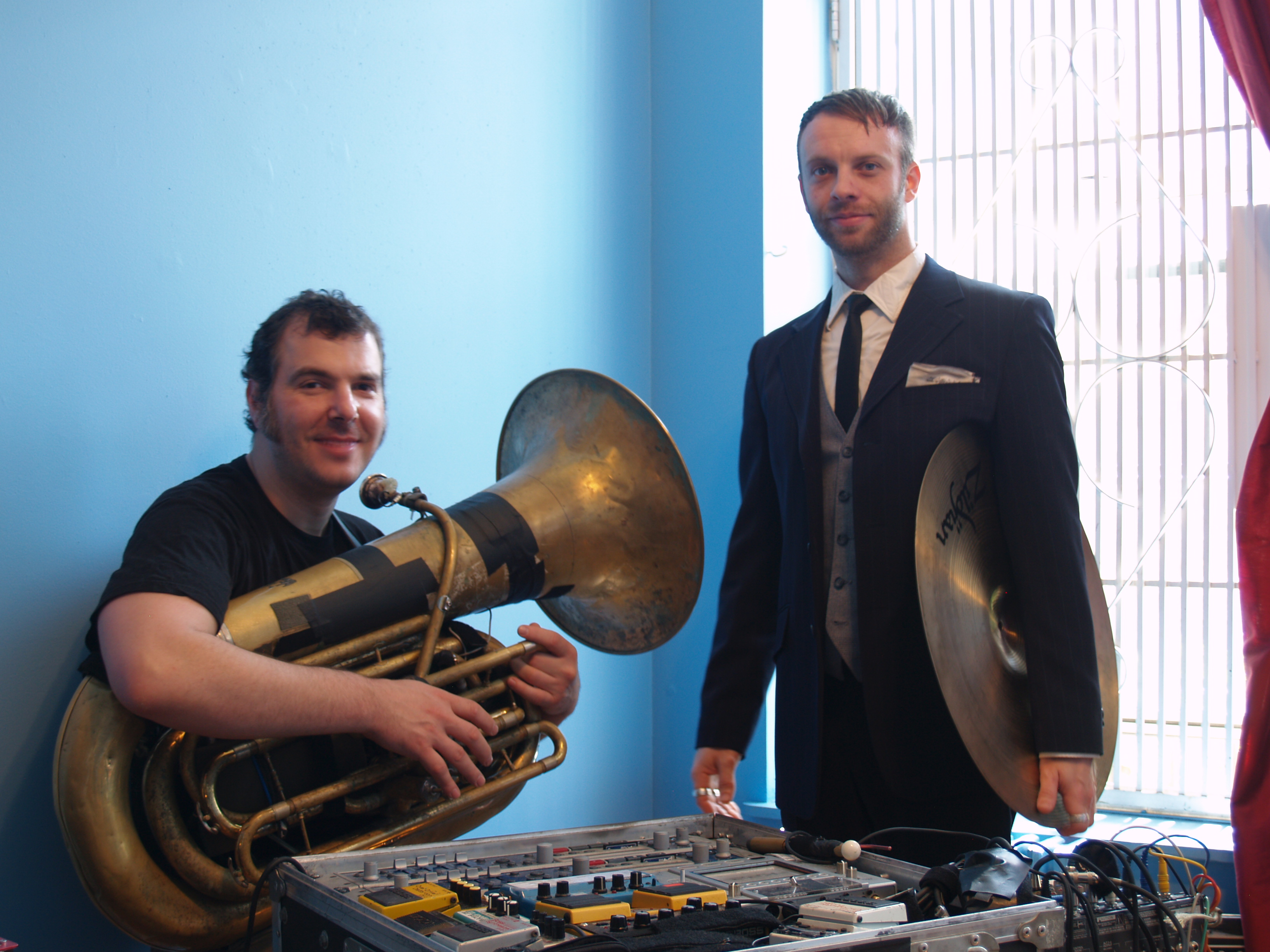
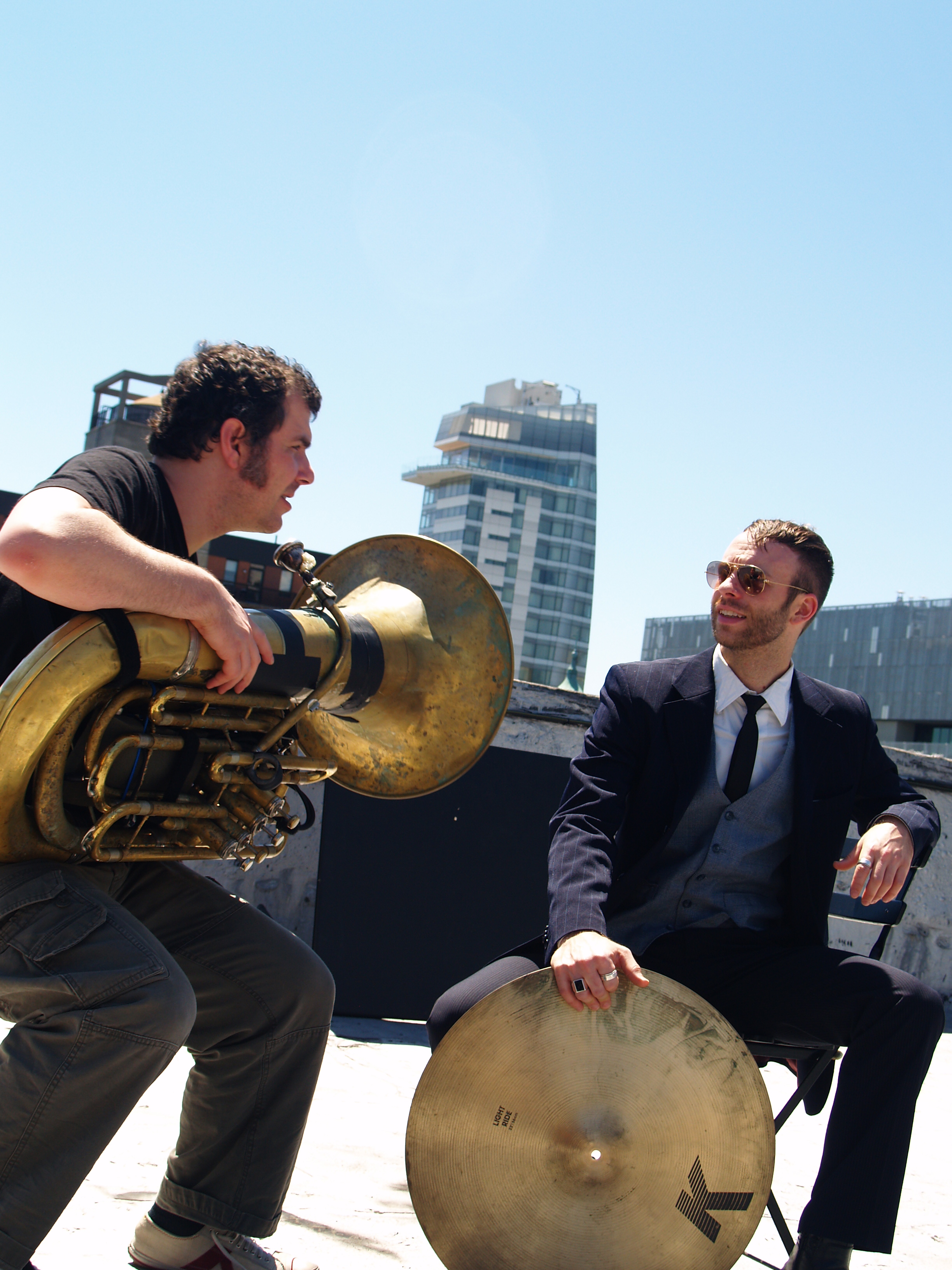
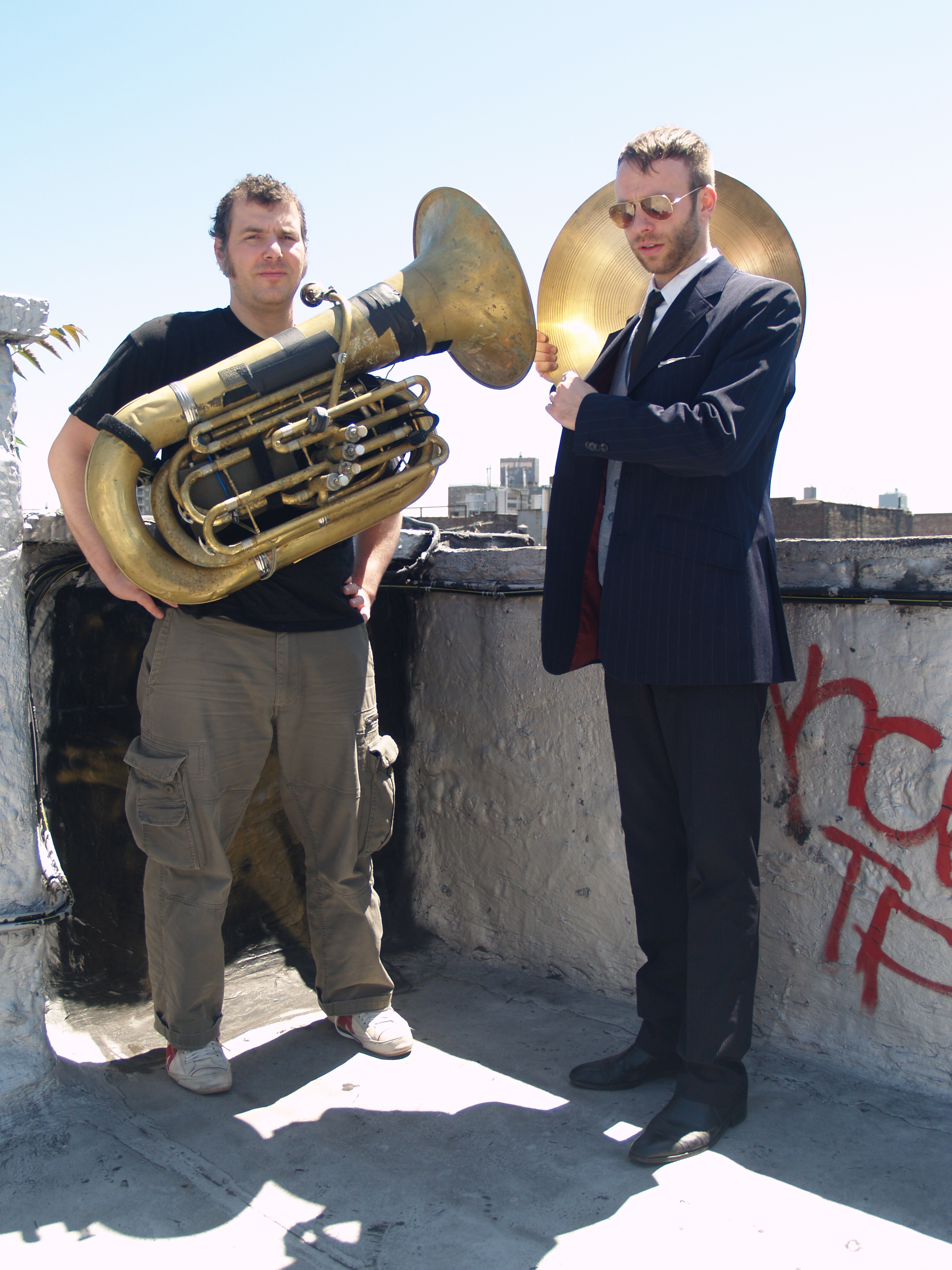
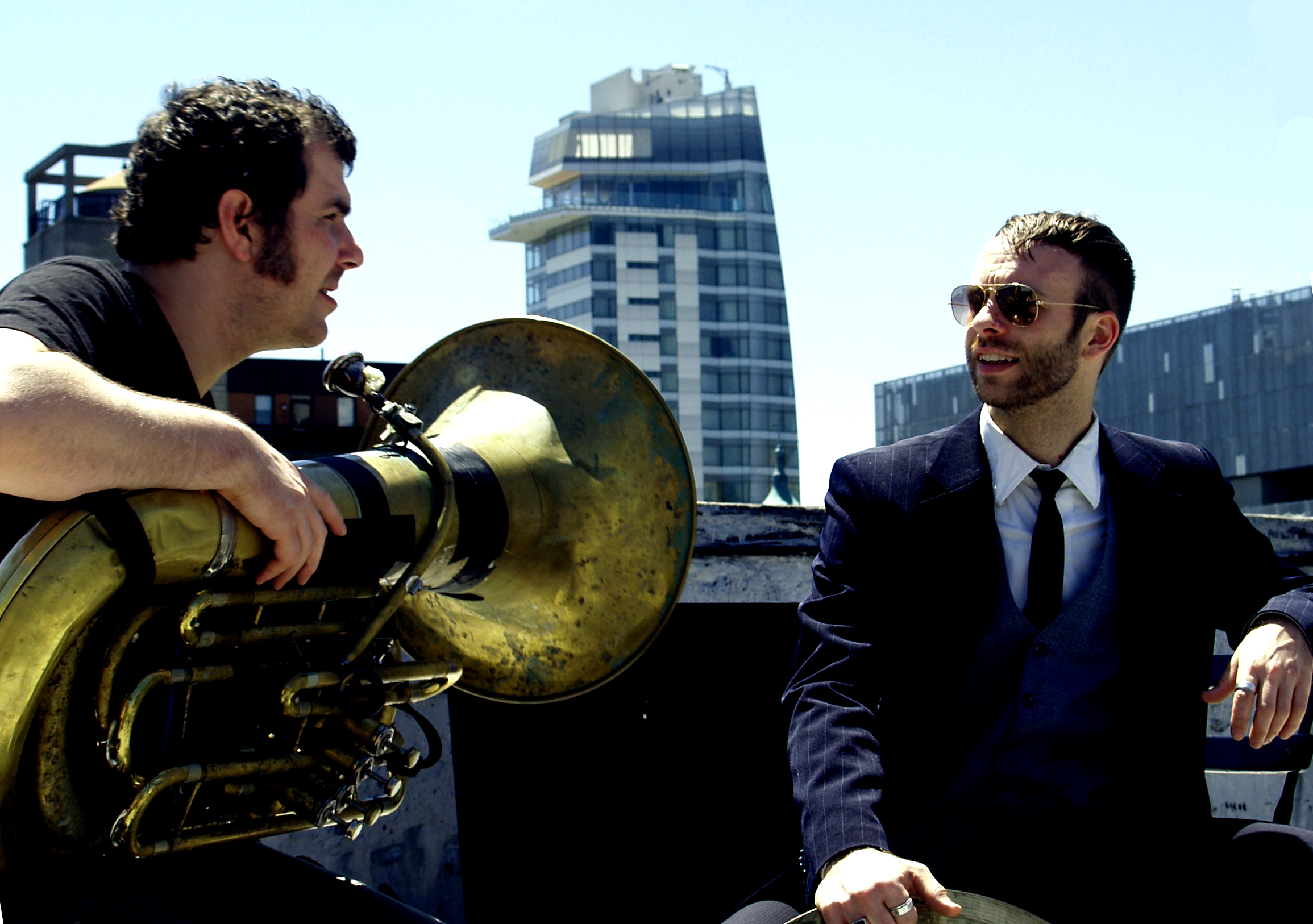
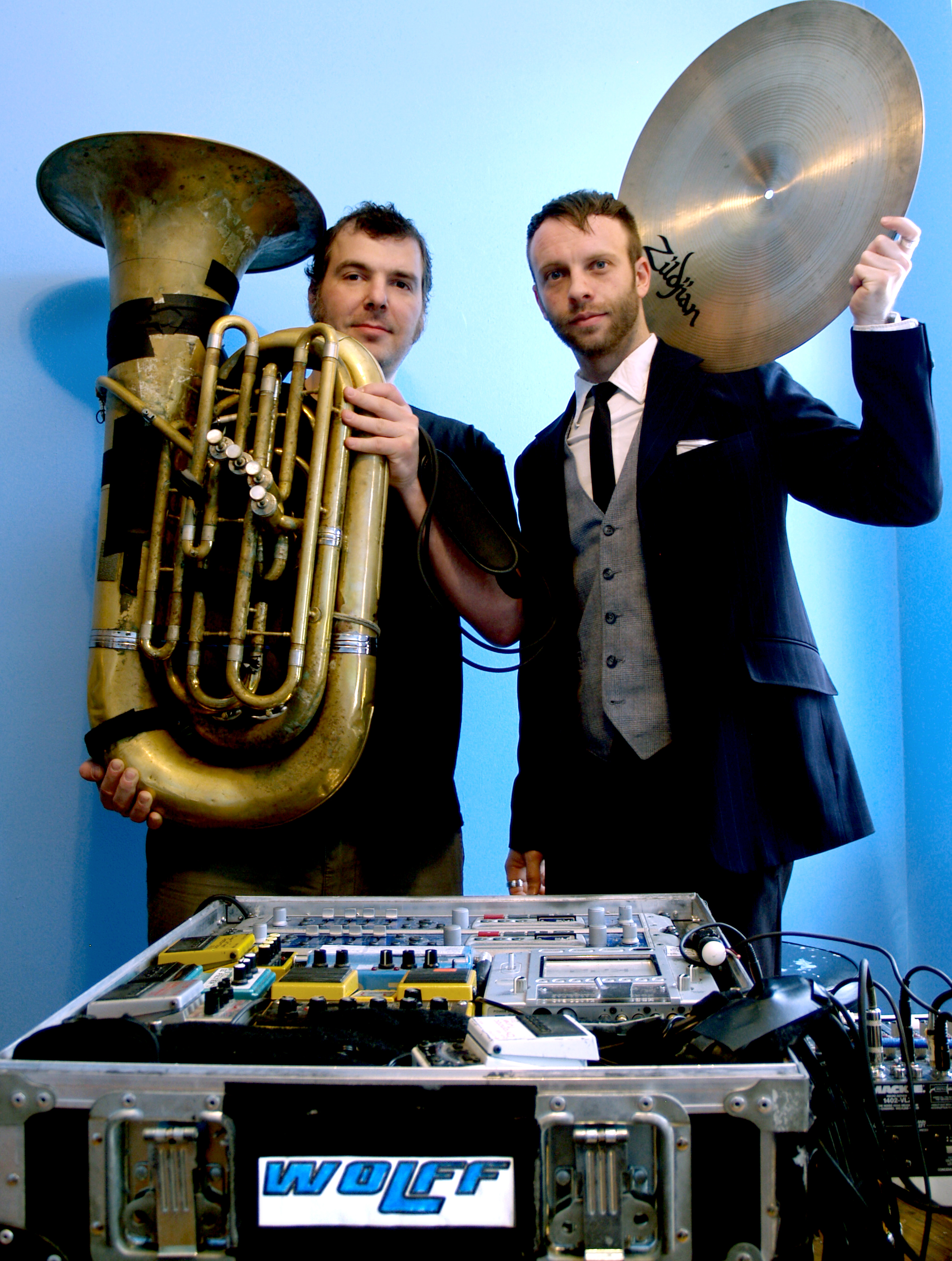
Brian Wolff first discovered the tuba at a music store in Austin, Texas. It was the summer of 1994, one of the hottest July's on record. And Wolff, whether deranged by the heat or the instruments sumptuous curves and shiny bell, knew instantly and inexplicably that he would dedicate the rest of his life to the pursuit of Tuba Stardom.
Knowing little of the tuba itself, he had few preconceived notions of the tuba's roll in music and thus was under the impression that, as a creator of sound, the tuba had no limitations at all. Wolff quickly dove in, starting a band with old friend Tony Nozero. They called themselves Just Drums and Tuba. Soon they added a guitar player and summarily dropped the "Just" from their name.
The band developed a visceral blend of old brass and new electronics, and toured the world extensively with Cake, Primus, Ani DiFranco among many others, building a fierce underground following in the process. But as over 50% of the marriages in the United States are wont to do, Drums and Tuba eventually packed it in and went their separate ways. Determined to strike out on his own in pursuit of the aforementioned Tuba Stardom, Wolff conceived of a solo act appropriately entitled "Wolff and Tuba."
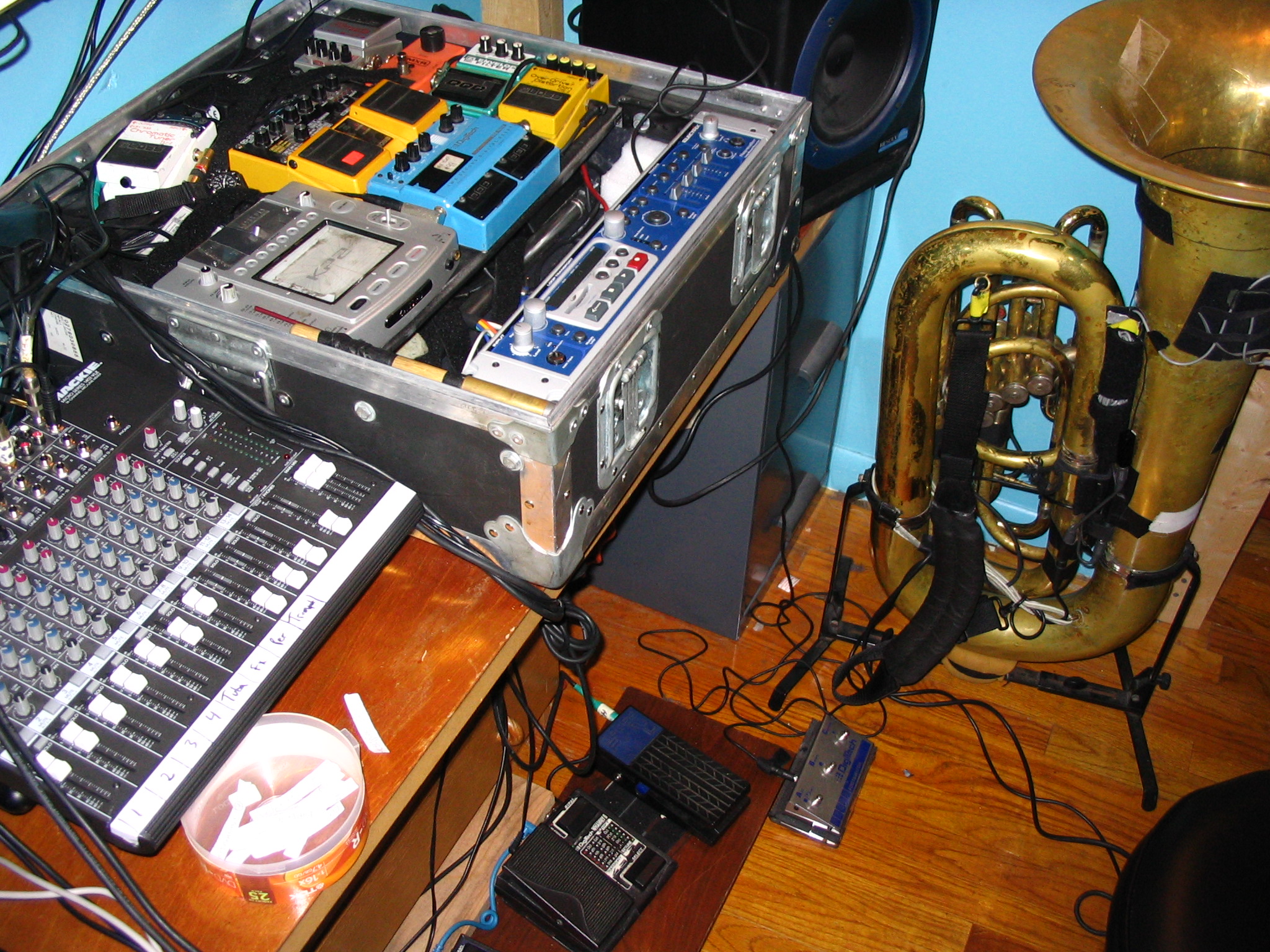
He returned to New York and barricaded the door to his apartment, emerging only after he had perfected a solo electronic tuba rock show whereby all sounds were produced by, with, through, and on the tuba. The music was created live by banging, beat-boxing, or singing through the tuba as well also playing the tuba in a more conventional manner. With the use of loop pedals, Wolff was able to tie all these disparate sounds together, forming music that was both out there (somewhere) and yet rooted in traditional song structures and strong melodies.
Wolff's friend David Harris once said there was a mythical brass ceiling in the sky that dictated how big a star you could become when you've dedicated your life to playing the tuba. Wolff has spent his career wrestling with those demons in the sky in a strangely bewildering but fulfilling quest to discover what wonders lie beyond the brass ceiling.
"Armed with effects pedals, looping devices, a microphone lashed to his instrument's mouthpiece, a drum machine, and sometimes a drummer, Wolff goes where no tuba player has gone before: the dance floor."
- Joan Anderman, Boston Globe, May 2009
Full Review
"...Brian Wolff continues to re-imagine what can be done with his unwieldy and beautiful instrument."
- The New Yorker, April 2009
Full Review
"...the world's only purveyor of electronic industrial tuba rock music..."
- Ed Symkus, Patriot Ledger, May 2008
Full Review
"...the Flaming Lips/Kanye West/Joy Division of tuba players."
- Laura Vogel, NY POST, April 2009
Full Review
"Tribal tuba, soupy loops and plundering drums concoct cosmic gumbo as Wolff's two-man army churns out chugging, interstellar funk; splicing catacomb vocals to interstellar samples for uniquely alien rhythms and bombastic, monastic panache. Mind-boggling combinations result as brass triumphantly crashes past ordinary categories for squishy, trippy robo-soul that grooves to subterranean funk."
- John Noyd, MAXIMUM INK, April 2009
Time Out New York
Wolff is Brian Wolff (of Drums and Tuba), who is now a one-man, electronica-esque act wherein all sounds are produced via tuba. That includes singing (through the tuba), percussion (banging on the tuba) and well, tuba. His weekly late-night Pianos gig gets plenty unhinged.
Knoxville news sentinel
Chuck campbell
2009
Wolff's 'tuba rock' act taunts tradition
Tubas are pretty much relegated to marching bands and orchestras, so Brian Wolff has his work cut out for him in his quest to be a "tuba rock" star.
As unusual as his goal is, he goes about it in a wildly unconventional way: He doesn't merely put a tuba at center stage of a rock band, he makes the tuba a near-one-instrument show.
Wolff is formerly of the trio Drums and Tuba and now is frontman for a duo called simply Wolff, featuring drummer Steve Garofano. Their debut, "The Brass Ceiling," defies expectations because in addition to playing the tuba in a traditional manner, Wolff has it wired for sound (literally), he bangs on it and he sings through it. The resulting noise is improbably melodic and engaging, at least for a while.
Wolff, who also sometimes plays trumpet and trombone on "The Brass Ceiling," and Garofano launch the release with the transcendently weird track "Body" built on a propulsive beat, an electronic-and-brass fusion centerpiece and distantly buoyant, swirling chants. It's sublimely surreal and truly unlike anything else.
Subsequent cuts keep it going, from the cosmic vibrations of "Broken Words" to the whipped-up, fantasy-land dance track "Addition by Subtraction." Produced by Paul Mahajan and Mark Ephraim, "The Brass Ceiling" also features a bombastic pair of instrumentals, "Bull Elephant" and "Screaming Tuba," that would serve as interludes in a rock opera, and a spacious "Bury Me" that sounds like a flamboyant march of the deranged.
And Wolff's lyrics are another surprise, dealing mostly with self-actualization and upbeat philosophy.
Rating: 3- 1/2
The Village Voice
Read Full Review
Brian Wolff, Tuba Hero
A neighborhood fixture continues his improbable reign over the Lower East Side
By Ezra Gale
Tuesday, November 10th 2009
It's well past 2 a.m., and the crowd at Pianos looks like a ragged band of refugees from an alcoholic front line. Up by the stage, a shirtless guy jumps excitedly up and down. To the side, a group of German tourists slug another round of PBRs and nearly knock each other over dancing. Others cluster around the back bar, knocking back shots. Meanwhile, a cracked version of Prince's "When Doves Cry" fills the room, with house beats clanging beneath the recognizable but distorted vocal line as a lion stalks a gazelle on a projection screen.
Onstage is Brian Wolff, who hunches over a bank of effects pedals while blowing and singing through that most unhip of high school orchestra instruments: a tuba. For a couple of years now, he has been a weekly fixture at the Lower East Side haunt, creating bizarre audio-visual concoctions, for a while by himself, but lately with a drummer, Steve Garofano, who pounds out the beats that Wolff loops after tapping the sides of his monolithic instrument.
Though Wolff isn't exactly unknown, (he was the tuba portion of the now-defunct Drums and Tuba, a trio that recorded a few albums for Ani DiFranco's Righteous Babe record label, toured incessantly, and fell apart a few years ago, )he's had to more or less reinvent himself to go solo. He holed up in his East Village apartment and learned how to layer and loop himself until he sounded more like an electronic junkyard orchestra than a solo tuba virtuoso. During his first year at Pianos, he recalls, "It was me, the bartender, and the staff."
But lately, things have taken an encouraging turn. This summer, Wolff scored what qualifies as a Holy Grail for unclassifiable solo artists: the opening slot on Buckethead's summer tour. "It was awesome," he says. The audience, he adds, was made up of "serious, hard-core guitar geeks, but they're the perfect audience: They're super into music, and they get there super-early. And anyway, I can geek out myself! I'm not afraid of any kind of geek!" Back home in the Village now, he plans to record his fourth CD in a few weeks, the first to feature some of the bizarre-o electro-tuba-rock cover tunes, like "Eye of the Tiger" and "She Drives Me Crazy," that have become staples of his sets (his previous three discs featured bizarre-o electro-tuba-rock originals). It will continue to foreground Wolff's vocals though, distorted through a microphone on his tuba, a new and essential element for him. "I want songs," he says. "I don't want it to be just boring psychedelic jams."
His late-Friday-night slots at Pianos are usually overstuffed these days, and even though the locale and time slot ensure an audience mostly interested in itself and the drink options, Wolff doesn't mind. "I think people are more open to shit than we give them credit for a lot of the time," he says the next day over beers at an East Village bar. "Like, last night, some of those people, OK, they're annoying maybe, but that's what's fun to me. It's the challenge. Like, 'I'm gonna get you to stay and see something you would never go see! You would never choose to go see this! And yet, here you are!' "
http://www.timesargus.com/article/20090515/FEATURES02/905150302/1011/FEATURES02
BARRE TIMES ARGUS
By ART EDELSTEIN Arts Correspondent - Published: May 15, 2009
Tuba finds its place in avant-garde rock
How serious a music consumer are you? Do you like your music traditional, safe, easily definable and easily recognizable? Or are you willing to explore the boundaries of sound, and recognize that music comes in many styles, flavors and genres.
I ask this because Wolff, a rock duet performing at Higher Ground in South Burlington on May 28, is anything but usual and certainly not traditional in its sound. Here we have a duo consisting of tuba and drums and vocals!
Frankly, I was giggling even before I put their CD "The Brass Ceiling" in the player. Had someone decided to send out a late April Fool's Day joke in the form of a CD? After listening to their 13-track offering I was scratching my head, partly in amusement and partly in confusion. Is this music or someone's idea of a joke? Is it avant-garde rock that had bypassed Vermont? Or is it a new wave of brilliance and I am the one who doesn't get it?
More likely, Wolff is all of the above.
What we have here is Brian Wolff on tuba and vocals and occasionally trumpet and trombone and Steve Garofano on drums. In general, I liken this duo to Philip Glass-gone-Goth rock. This is music on the edge of the known world that we call rock music.
Wolff, who does most of the "singing" and I use the term loosely as explained later, has a vision and has done his best to maintain it. His goal appears to be to take the tuba, the long suffering butt of brass instrument jokes, and bring its sound and cachet to the masses. Whether the masses need to know this is another question altogether.
Web site information for Wolff tells us that in 1994, he discovered the tuba while in Austin, Texas. According the biography, "Knowing little of the tuba itself, he had few preconceived notions of the tuba's roll in music and thus was under the impression that, as a creator of sound, the tuba had no limitations at all. Wolff quickly dove in, starting a band with old friend Tony Nozero. They called themselves Just Drums and Tuba. Soon they added a guitar player and summarily dropped the 'Just' from their name."
After performing with his group for several years and living in New York City, Wolff "barricaded the door to his apartment, emerging only after he had perfected a solo electronic tuba rock show whereby all sounds were produced by, with, through, and on the tuba, created live by banging, box-beating or singing through it, and playing in a conventional manner. With the use of loop pedals, Wolff was able to tie all these disparate sounds together, forming music that was both out there (somewhere) and yet was rooted in traditional song structures and strong melodies."
Thus was formed the sound heard on "The Brass Ceiling."
I am not going to tell you that I liked what I heard of Wolff. The mostly incomprehensible lyrics were dark, the "Goth" part of this music. On track one, "Body," Wolff intones, "I had all the time I needed to live until I nearly died, And now I do not know how to live nor how I will survive, Only you can have it all". On track two, "Bury Me," Wolff writes: "All the signs say it's all gone to hell, All my fears are out of control"
This is not happy, snap your fingers, whistle a tune down the street music. But it is creative. The fact that Wolff can somehow sing and play tuba is frankly amazing. That he has created loops of sound and figured out ways to make this lummox of an instrument do more that oompah, oompah, deserves recognition. Throughout, drummer Garofano gives Wolff's playing coherence and a danceable beat.
By the end of the CD I had to acknowledge that while I had no desire to listen to Wolff's music again, what this duo has created certainly would be of interest to those music consumers who are more adventurous in their tastes than I am.
Find out for yourself at Higher Ground on Thursday, May 28.
AllMusic.com
http://blog.allmusic.com/2007/10/22/cmj-report-tuba-vs-pianos/
CMJ Report: Tuba Vs. Pianos
October 22nd, 2007 | 5:31 pm est | Jason Lymangrover
digg it! add to del.icio.us add to reddit
With dementia setting in from sleep deprivation and many pairs of exhausted
eardrums ringing on the heads of attendees, the fifth day of shows concluded
with a mega-showcase at Pianos, where a dozen bands performed. What was expected
to be a relatively mellow Saturday night (considering that there were no punk
or metal groups performing) was especially loud, maybe one of the loudest
shows of the fest. The PA was cranked and distorted, but this didn't stop
the crowd from filling up the space and jamming up the entrance for most of
the night" with the exception of Ted Nesseth of the Heavenly States, whose
unreasonable volume drove most people out in a scurry. Most performances were
less memorable than the shining sets by Great Northern (an L.A. poppy-shoegazer
boy/girl band with serious sex appeal), Nouveau Riche (a clash of R&B and
indie rock, kind of like Teenage Fanclub backing up the Brand New Heavies
and guest starring Jay-Z), and War on Drugs (an anti-folk hipster duo that
brought to mind an acoustical set of Mercury Rev songs performed by Suicide).
Those people with enough endurance to stick it out through the nine hours
of music were rewarded with one of the strangest acts of the festival (and
that's saying a lot). Maybe it's because the last show didn't start until
well after 2 a.m. that the crowd was only comprised of about ten people, but
it's more likely most people saw a guy playing the least sexy, least rock
& roll instrument known to man and did a quick 180 back to the meat market
of a club next door. Using no pre-recordings, Brian Wolff, otherwise known
as the one-man band called Wolff, painted a colorful canvas of sounds through
a beaten up, duct-taped tuba. With the assistance of guitar pedals, delay,
distortion, bass-synth, envelope filters, phaser, whammy pedals - a simple
full-bodied horn was digitally transformed into loops that mimicked the electro
sounds of Bjorks Post, with airy Sigur Ros lulls creating a gentle, eerie
ambience. A transducer mike in the mouthpiece picked the soft vocals of the
former member of Austin's Drums & Tuba, while an acoustic guitar pickup inside
captured the high and low frequencies that he tapped on the rim and bell of
the horn for percussion. After building off his newly developed beat, he blew
a meaty bass line, clicked his pedal to capture it, and switched to a horn
solo, disguised as a synthesizer. A lone breakdancer moved rigidly to the
beats in the center of the floor, while a few onlookers leaning up against
the wall scoffed appropriately at the weirdness of the scene. Those who understood
the intricacy of the music at hand were certainly impressed, but most were
just confused. The goofy pop-locker explained later that he had no idea what
the tuba guy was doing and that the that he was just "caught up in the groove."
The few others who looked past the gimmick and picked up on the true genius
of Wolff would go home late in the night, excited to tell their friends about
the underdog of the fest and ready to have sweet dreams filled with the futuristic
songs of a very eccentric artiste.
http://transeuropexpress.wordpress.com
Reviewed by Julian Wilson
Wolff/Addition by Subtraction
Just when you think that everything's been done with electronic music comes
Wolff with a radical yet, at least on Addition by Subtraction, completely
successful idea. The gimmick, if you want to refer to it as such, is that
most of the instruments are played through a tuba. What could've been a prog-rock
disaster of epic proportions is a surprisingly accessible and actually well-crafted
disc that sounds completely, breathtakingly original. Bravo! The title track
and "What I See" are rooted in the raincoat post-punk of Joy Division; however,
Wolff is feeding the cold, ominous textures and pulsating rhythms through
a tuba, producing a big, eeriely claustrophobic sound. Add the distorted vocals
to them, and you have Goth redefined for the 21st century.
Shockingly, Wolff is incredibly versatile, able to create varied styles with
his super tuba powers. "It's Okay to Be Happy" hops with playful electronica
while "Broken Words" slams the scratchy beats of hip-hop with the chilly Euro
dance of Kraftwerk. "Combustible" swirls with a jazz-like free flow while
"Screaming Tuba" and "Haunted" bring on the industrial grind.
http://www.whisperinandhollerin.com/reviews/review.asp?id=5299
Our Rating: 9 out of 10 stars
Wolff is a visionary that would fit well on Mute Records. Like Aphex Twin
and Moby, Wolff is venturing into sonic territory that electronic music, at
least to my knowledge, has never crept into. In this case, using the tuba
as the primary instrument for the industrial, avant-jazz, and progressive
rock structures that he has built on "Addition by Subtraction." The title
probably refers to Wolff's minimalistic approach on this record, letting his
tuba create much of its futuristic noise, even using guitar pedals on them.
If all this seems rather quaint or unlistenable, do not be afraid. This is
not an experiment in chaos. Wolff actually has an ear for pop hooks; check
out the driving beats of the title track and "Broken Words," for example.
Now it may not be pop music in the commercial sense of the word, but Wolff's
songs are about as cleverly hummable as Wire's. That's another act whose irreverent
spirit was somehow able to manifest itself into toe-tapping, memorable compositions.
And while "Screaming for Tuba" may sound like saws slicing through word, Wolff
makes it work; as far as industrial music is concerned, "Screaming for Tuba"
is edgy yet tuneful. In other words, this isn't an exercise in headaches like
Throbbing Gristle at their most dissonant.
Author: Adam Harrington
http://postalternative.wordpress.com
Wolff could be rock's first tuba hero
March 5, 2008
Dereks New Music Bin
Artist: Wolff
Album: Addition by Subtraction
Rating: 9/10
Written by Derek Jensen
The day that the tuba becomes a primary instrument in rock & roll is when you know progress has finally been made,
that the cutting edge has been sharpened once again. Wolff is seriously ahead of the pack. While industrialists like
Nine Inch Nails don't know where to go anymore, Wolff has clipped on guitar pedals to his tuba and is taking us to sonic
terrain previously unheard, at least from my ears. The title cut is oppressive and claustrophobic, recalling Dessau and
Ministry and other dark, machine-like European bands from the late-80s to the early-90s. However, those acts relied mainly
on synthesizers and drum machines to pull off those cyborg effects, not a tuba. "What I See" and "Screaming Tuba" will leave
you similarly bruised.
Wolff never loses momentum or his sense of rhythm; Addition by Subtraction moves along fairly quickly and always keeping our
interest. Not everything is grim, either. "Broken Words" is actually danceable. Too weird for you? Maybe, but perhaps not.
I was actually surprised at how melodic this record turned out to be. It's not too far off from the experimental sides of
Depeche Mode and New Order.